Thursday, January 3, 2008

Taiwan Times Vol. 7 -- Countdown to Disaster

It had all the makings of a perfect night out. Brian, an American friend who also works as an English teacher, gave me the lowdown. A promoter was renting the presidential suite at the Sunworld Dynasty Hotel and throwing a kickass party for New Year's. Since the party was on the 15th floor, it would offer a spectacular view of the fireworks at Taipei 101, the world's tallest completed building. The flyer looked promising:


This would be a chance to relive the awesome 2006 New Year's party I attended in Shanghai, at Cotton's. At the time, Cotton's was a beloved bar that was having its grand reopening for New Year's. A bunch of my closest friends in Shanghai were all there. The bar was in a restored mansion, and we ran amok, it was like messing up someone's house--but not having to clean up. It was great! Maybe this would be Cotton's 2.0.

I really should have waited before committing myself so soon, because the best parties often come up at the last minute, when friends suddenly tell me they're doing something. But Brian has been a reliable clubbing partner for a while, so I trusted him. I like to prepare things in advance, and it was nice to know what I'd be doing for New Year's.

Throughout the week, I was so pumped, I mentioned it to everyone I knew. They all agreed it sounded liked it'd be cool.

Thomas, a translator at the news agency where I used to work, told me he was having a party at his apartment. James--another translator--and a bunch of my former colleagues would be there.

Photobucket - Video and Image Hosting


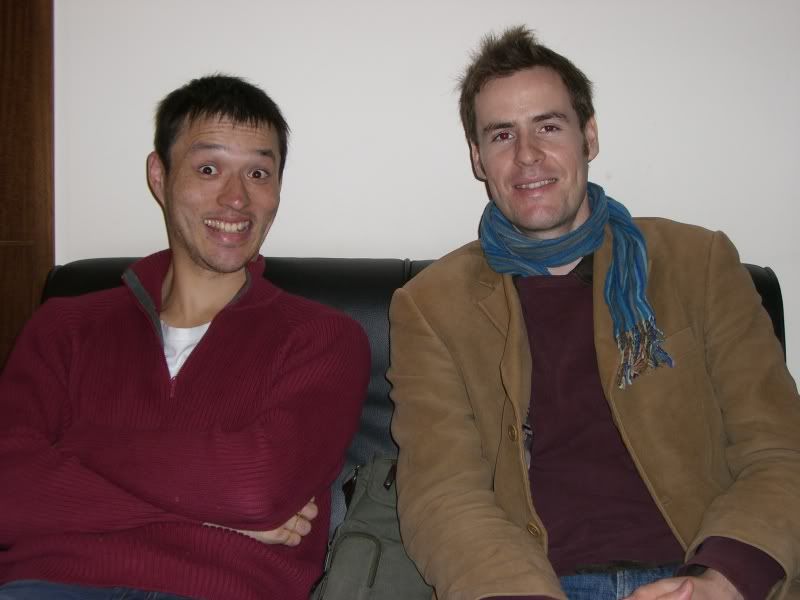
James and Thomas, two cool guys from England making a living as translators.

I couldn't pass up on a chance to see them, so I decided to go to his party first, then go to the hotel later. That was my first mistake.

I was having so much fun reconnecting with my old colleagues and making new Taiwanese friends that I lost track of time. By the time I left Thomas' apartment to go the hotel, it was already 11:15 p.m. Plenty of time to get to the hotel before midnight, right?

The city government restricted the subway system because of the insanely high New Year traffic, so the gates to the platforms only opened very couple of minutes to stem the flood of people. Once I finally got onto a train, I thought I was safe. Then suddenly, the train started slowing down! Over the PA system, a machine voice said that the train had to slow down to adjust for headway. Oh crap, this can't be happening!

To give you a better idea of my dire situation, I pasted the Taipei MRT map below. I coming from Thomas' apartment, which is near Gongguan. It's on the green line, 5 stops below Taipei Main Station. I was trying to get to MRT Zhongxiao Dunhua, on the blue line, 4 stops east of Taipei Main Station. Click on the image for a larger picture.

Route Map
 
Believe me, it's not really as far as it looks. I was going to get off at MRT Zhongxiao Dunhua on the blue line and take a taxi the rest of the way. The Sunworld hotel was at the intersection of Nanjing and Dunhua Roads. I was only two stops away from my destination, when the train completely stopped.

Everyone on the train gasped. There were loud moans and urgent whispers. I didn't need to be fluent in Chinese to understand that everyone thought we were seriously screwed. I frantically sent a text message to Brian--who was already at the party--saying that I might not make it by midnight.

The train shuddered awake and chugged to MRT Zhongxiao Fuxing, one stop before Zhongxiao Dunhua. I wasn't taking any more chances. I bolted out of the MRT station to the street.

The streets were dead empty, everyone must be at their lookout spots, waiting to see the fireworks at Taipei 101.

A lone taxi was passing by. I hailed it down and dived in, shouting out the directions in rapid-fire Mandarin. I was so close!

When the taxi dropped me off, I leapt out and broke into a run, making a mad dash for the hotel. I could still make it, dammit!

I charged into the hotel. There was another party on the first floor banquet hall. Balloons started pouring down on the guests, and everyone was shouting and toasting drinks. NO NO NO!

The elevator took an eternity to get to the 15 floor. I staggered out a broken man. There was nobody around, so I wasn't sure where the party was. In one room, there was a desk with flyers announcing the party I was going to. But there was no one to take my ticket and let me in.

A Westerner with a satisfied grin loped out of a room and came to the desk, saying, "Dude! You just missed the show!"

SHIT!

While I was waiting at the deserted reception area, everyone else was on the 15th floor roof watching this:


The night was pretty much downhill from there. I got lost trying to find the hip-hop room. I kept stumbling from the main room, which played techno music, to the rooftop area.

I needed directions. I saw a Western guy dressed bohemian-style, talking to his friends and pretending to be cool and above-it-all. I asked him, "Excuse me, where is the hip-hop room?"

He looked down his nose at me and sneered, "Fuck hip-hop."

I should have kicked his ass for uttering such blasphemy.

Instead, I left him to being a douchebag and found the hip-hop room on my own. Brian greeted me and asked where I'd been. I felt too defeated to bother replying. Right now, I just wanted to dance and try to salvage the night.

The DJ was awful, all the songs he played were at least 15 years old. Brian assured me the music had been good earlier. There was a time when I used to force myself to dance to every song, no matter what, so I could get better at dancing. Now I won't dance unless I hear songs I like.

Well at least I could hang out with my friend. Then I discovered Brian had a date, and mostly concentrated on her the whole night. I don't blame him:

From the album:
"New Year's Eve (2008)" by Anfisa Pan

That's Brian on the right, looking quite happy. I'd be too, if she had been my date. Oh well, no hard feelings. A playa's gotta do what he's gotta do.

Anyway, I gamely tried to dance to the lame music for a few hours before calling it quits. There's no way my New Year's could possibly get worse. As I walked out of the hotel, I checked my cell phone. "1 new message." My friend Colin had sent me a text message several hours earlier. Here's a recent picture of us:

Photobucket - Video and Image Hosting


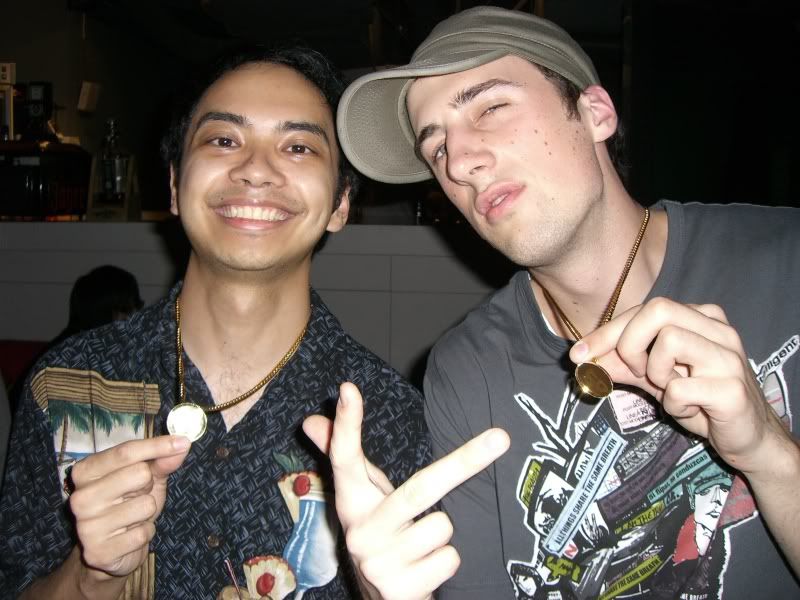
Colin and me goin' gangsta at the Wufenpu Garment Wholesale Area.

Here's what Colin's text message said: "Hey, I'm at Ximen with all your co-workers from School 5 so get your ass down here now!"

Dammit, I could have been partying out with them instead of trying to dance to the crap music here! My life sucks.

Monday, December 31, 2007

Taiwan Times Vol. 6 -- Studying Chinese


Photobucket - Video and Image Hosting


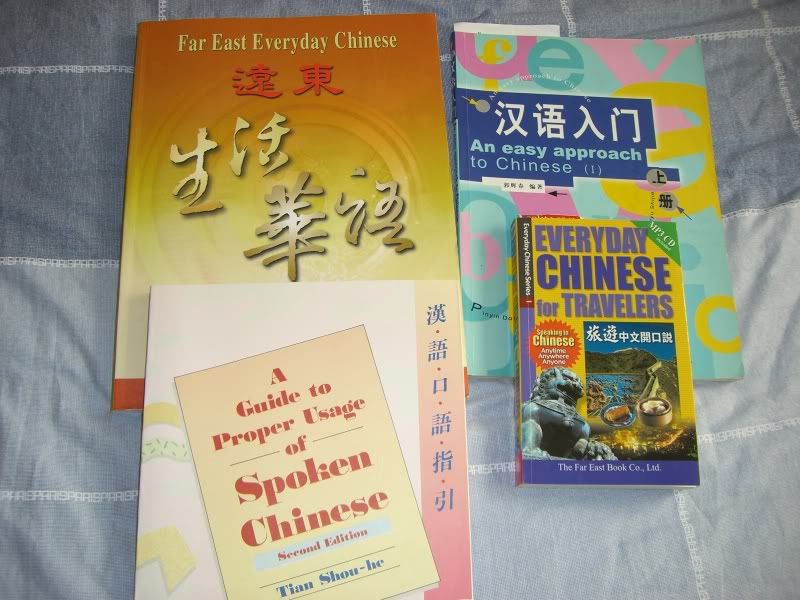
My Chinese textbooks. Except for "An Easy Approach to Chinese," all my learning materials were published in Taiwan, not China. For a complete discussion of the two places, read this post: Studying in Taiwan vs. China.

Finally, after literally years of telling my friends how I planned to quit my high-pressure job to teach English and study Chinese, I've finally done it! It's a good thing too, because I was getting sick of hearing myself say it. It's a resolution that I just haven't been able to keep until now.

I really wanted to enroll in a university program, like at National Taiwan Normal University (commonly known as "Shida") or at Chinese Culture University. The problem was that their class terms last 3 months, while the English classes I teach change every 2 months. I was worried that my fluctuating work schedule would interfere with my Chinese studies.

In the end, I opted to go with a tutor at a private language school near Chiang Kai-shek Memorial Hall. Although it costs more, I have more flexibility to reschedule classes if something comes up at work. At a university, I'd have to follow their timetable.

My teacher is also able to tailor lessons to suit me. Our first few classes didn't go so well, because she had trouble getting a grasp of what my Chinese fluency was. She thought my vocabulary and listening comprehension were quite good, which made her think I was more advanced than I really was. I've never studied reading and writing, so I'm a complete novice in those areas. Finally, she figured that she can move faster on teaching speaking, using only Chinese. For teaching writing, she goes slower and uses English more frequently.

I supplement my lessons by doing language exchanges. This is when you and a local meet at a casual place like a coffee shop to help each other learn a language. I actually don't think this is a good idea for a total beginner, because you simply won't be equipped to handle even the most basic conversation in Chinese. It'd be better to spend the first few months trying to build up your vocabulary and learning useful sentence patterns before doing a language exchange.

To keep a language exchange from veering off too much into a conversation in English, I like to bring a notebook with words and sentences that my LE partner can translate. Writing things down in English also helps my LE partner, as many times it's easier for them to understand a word by reading it instead of hearing it. Most non-native English learners have studied reading and writing in English, but not speaking.

Just before meeting for a language exchange, I like to write down a list of words about a particular topic that I want to be able to talk about in Chinese. There's a lot of cool things about the language that you'll never learn in class.

My greatest treasure was a notebook of slang I built up after doing a year of language exchanges in China. Examples: "Yellow movie" means porno movie and "vase" means bimbo. One thing I noticed is how Chinese use animals to refer to bad people. A "color wolf" is a dirty old pervert, a "snake woman" is a femme fatale, and a "yellow bull" is a scalper who charges exorbitant prices for train or concert tickets.

Ideally, a language exchange partner should be able to speak enough English to explain something to you, but not so much English that they can easily carry a full conversation. It's too easy to lapse back into English. This is hard for me to find in Taipei, since it tends to draw the best and brightest from around the island.

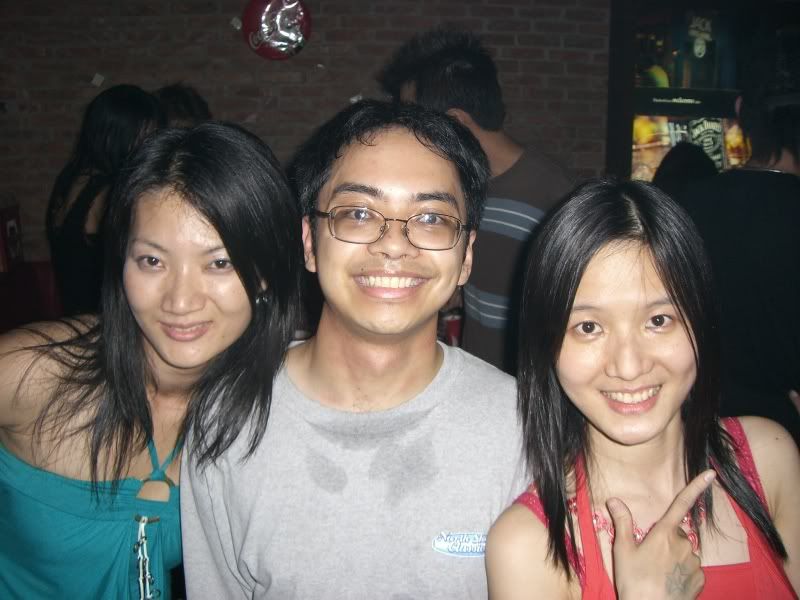
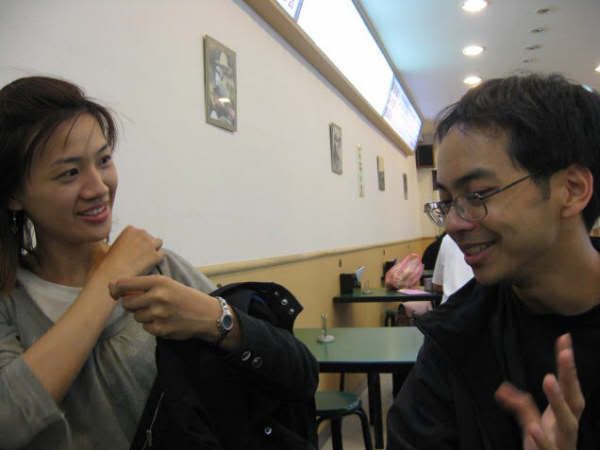
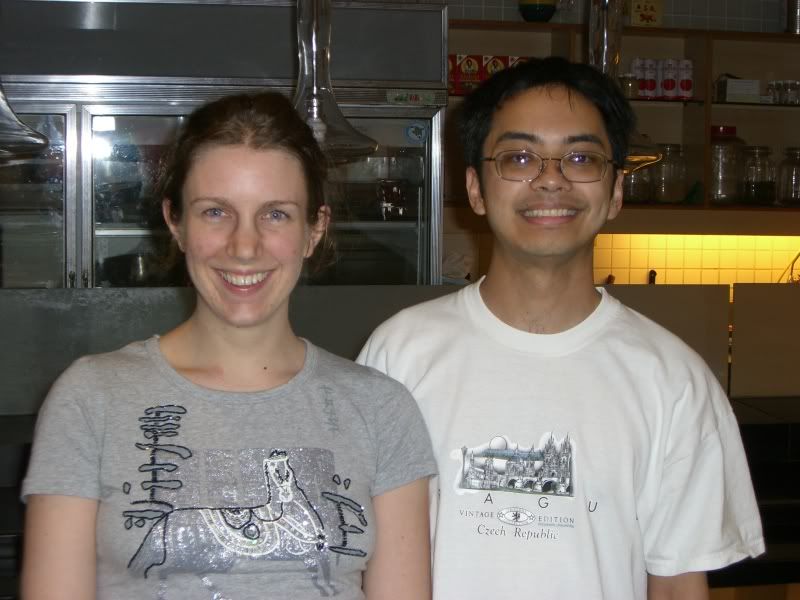
My other problem is that I have a hard time concentrating on studying the language during my LEs. It's too easy to get distracted. Consider some of my LE partners:


Photobucket - Video and Image Hosting


Photobucket - Video and Image Hosting

This may only be my experience, but I find that girls are more interested in learning English than guys. I see this all the time in my English classes, where females outnumber males by a large margin. Even when I was a university student, all my creative writing classes were dominated by girls.

Appendix: My Chinese books

Far East Everyday Chinese--virtually all universities and language schools use the Practical Audio Visual Chinese books published by Shida. I've heard they're too dense with grammar and the words are outdated.

The Far East books are very practical in daily life. From the first lesson, you're already learning to ask how much something costs, which is much more practical than learning how to introduce yourself.

An Easy Approach to Chinese--The Chinese book I used in Shanghai. I didn't like the textbook my teacher was going to use, so I went to the Foreign Languages Bookstore on Fuzhou Rd. After sifting through a lot of books, I chose this one because it focused on speaking and didn't teach Chinese characters. At the time, I wanted to learn the language for survival, not literacy.

A Guide to Proper Usage of Spoken Chinese--This is a handy decoder for Chinese grammar. There's often two or more very similar ways of saying something in Chinese, but they're different enough to cause confusion. This book explains Chinese grammar in a very clear, simple style.

Everyday Chinese for Travelers--Also published by the Far East Book Co., this is by far the best Chinese phrasebook I've ever seen. Page after page of useful vocabulary and phrases.

This book is my cheat sheet when I need more vocabulary to do my Chinese homework. The only downsides are that it focuses on Chinese as spoken in Taiwan rather than China, and uses traditional Chinese characters instead of simplified.

Tuesday, December 18, 2007

Studying Chinese in Taiwan vs. China

Update: This is one of the most popular posts on this blog. Several people have asked questions in the comments.  I do not check on this blog that often. If you have a question, please e-mail me using the contact form.

Have fun studying Chinese!

Marcus


The Case for Taiwan
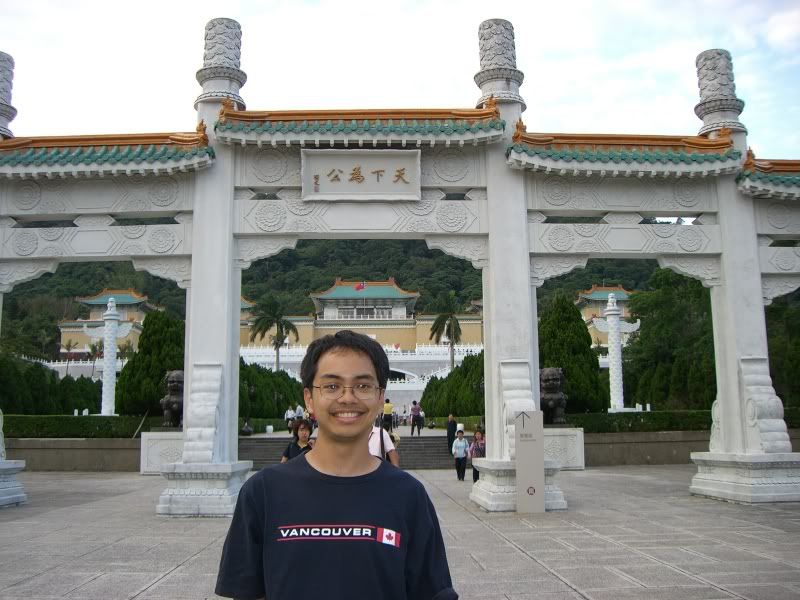
National Palace Musuem Gate
National Palace Museum in Taipei

The Good:

Traditional characters. The most popular reason I've heard for studying Chinese in Taiwan is to learn traditional Chinese characters. In China, the government mandates the use of simplified characters.

For anyone interested in pursuing higher-level research into Chinese history or just getting deeper into the culture, knowing traditional characters is a must. They're also more fun to learn, because you'll gain a better understanding of the history of the characters.

Traditional Chinese Culture. Artists, scholars, craftsmen, monks and many other intellectuals fled to Taiwan around 1949 to escape the rise of communism in China. The best pieces of the art collection in Beijing's Forbidden City were shipped to Taiwan and are now displayed at the National Palace Museum. Simon, one of my English friends, put it best when he said, "If you could wrap up Chinese culture and ship it somewhere else, that's basically what happened in Taiwan."

In China, culture was stamped out by Mao Zedong during the Cultural Revolution and the Chinese government still restricts freedom of expression and religion. Very often, I found temples in China to be reconstructions of ancient temples that were destroyed, and were just tourist traps, rather than places of worship.

Idioms. Chinese language in Taiwan is often enlivened with colorful phrases. An English friend of mine who works as a translator told me about newspapers in Taiwan and China, saying that she found Taiwanese newspapers to be more literate and creative, while Chinese papers were very dry and straightforward. The use of idioms is what made the difference.

A Chinese teacher I knew in Shanghai told me sometimes she can't understand what Taiwanese are saying, because they use so many "special phrases."

For example, "you can't eat it like rice" (mei fan chi) is said to comment on something that's not practical, that won't let you make a lot of money. One of my Taiwanese friends, who wanted to study English literature, said her parents told her this all the time.

Scholarships. Taiwan offers bigger scholarships for foreigners to study Chinese, compared to China. If you apply from abroad, you can get a Taiwan scholarship with a stipend of about US$770 (NT$25,000) a month. China scholarships only give about US$110 (800 RMB) a month. Getting paid to study a language while living abroad, now that's a sweet deal!

Less Culture Shock. Taiwan is a softer landing for people moving to Asia for the first time. Taiwan has deep links to America and Japan, so it feels more comfortable. You can find more of the same stores and products that you would see back home.

Many Taiwanese have studied abroad and traveled. This is a huge benefit! As a result, Taiwanese have a broader world-view and are easier to talk to compared to mainland Chinese. Overall, Taiwanese are also much friendlier and more hospitable.

Taiwan is a democracy. Taiwanese freely criticize their government and talk about politics, which would be impossible in China. The press is free and you can access anything on the Internet you like. Whenever Western students visited from China, they were overjoyed to be able to get Facebook again.  China's Internet is censored by the government.

The Bad:

Confusing romanization. Taiwan uses several systems for spelling Chinese words in English. This causes endless confusion for expats, because the same word can be spelled a million different ways. For example, Zhongshan District could also be spelled as Chungshan or Jhongshan.

Bopumofo. This is a completely different set of characters that are used to teach Chinese to foreigners and young Taiwanese students. It's only used in Taiwan. Anyone who studies Chinese in Taiwan is usually forced to learn it before getting into Chinese characters. Many foreign students complain about having to study it, since it's not used in China or the rest of the world.

Too much English! Very often, I try to speak Chinese to Taiwanese, only for them to reply in English. It's easy to fall into an English bubble in Taiwan, by only hanging out with foreigners and Taiwanese who can speak English. This is especially true in Taipei, the capital city.

Lack of study materials. Taiwan has far fewer books for foreigners studying Chinese. In China, bookstores have shelf after shelf of textbooks.

No HSK. The Hanyu Shuiping Kaoshi is a test created by the Chinese government to evaluate the Mandarin fluency of foreigners. People take it and use their score as a kind of certification of their language ability. The HSK is not administered in Taiwan, so a person will have to fly to Hong Kong to take the test.

Being in a backwater. China is really where the action is, so while in Taiwan you might feel cut off from the excitement. Taiwanese news is notoriously boring, because nothing important happens in Taiwan.


The Case for China
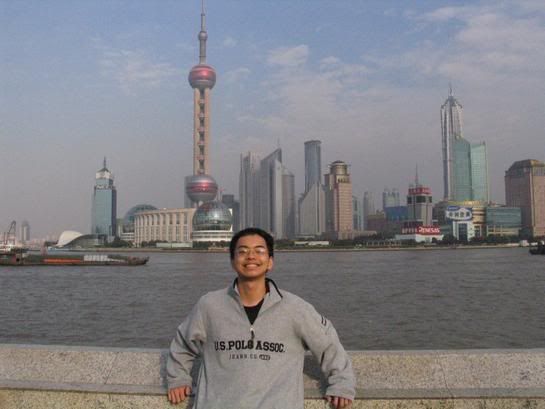

Shanghai skyline

The Good:

Practice. In China, English is spoken far less than in Taiwan, so I was forced to learn Chinese and use it every day. At my job in Shanghai, my Chinese colleagues spoke very little English, so I ended up trying to learn more of the language so I could communicate with them. Pretty soon, I was able to ask them if the Internet was broken or tell them the photocopier was out of paper.

At my first job in Taipei, all my Taiwanese colleagues had either worked or studied abroad, so they all could speak English really well. English is a part of the education curriculum in Taiwan and it's popular to study at English cram schools in the evenings, so even Taiwanese who've never been abroad can speak English surprisingly well.

One of my Western friends studied Chinese in Singapore, which turned out to be a missed opportunity. English is widely spoken there, so it's extremely easy to be lazy and not study Chinese. By the end of his term, his Chinese was nonexistent. What's worse, he said his English actually got worse, because Singaporeans often speak a pidgin English called Singlish.

After a year in China, I was able to order food in a restaurant, give directions to a taxi driver and handle my travel reservations. My crowning achievement was when I was able to order a pizza over the phone, speaking completely in Chinese. I told the clerk what kind of pizza I wanted, the size of the pizza and my exact address. Elizabeth, my English flatmate who was a Chinese major, overheard my phone call. When I hung up, she said, "Good work!"

Hanyu pinyin. In China, it's the standard for spelling Chinese words in English. Once someone learns pinyin, they can read and pronounce any Chinese word relatively accurately, even if they haven't learned Chinese characters.

Cost of living. Although prices are rising with its surging economy, China is still a cheap place to live. If you decide to live somewhere other than Beijing or Shanghai, it gets much cheaper. I actually recommend living in a 2nd-tier city, as they're often less crowded, cleaner and force you talk to locals more.

My suggestions: Qingdao, Kunming, Xiamen, Chengdu, Hangzhou, Dalian, Nanjing, Xi'an. They are also certain small towns with beautiful scenery and lots of foreign backpackers, if you're looking for that atmosphere: Dali, Lijiang and Yangshuo. Be warned, these three places are very touristy.

Yangshuo is particularly good for picking up casual English-teaching work. Some schools there even offer "cultural exchange" programs, where you'll be given free accommodation and Chinese classes for teaching a little bit of English. For the latest word from expats on the ground, check Chinese Forums.com.

Career advancement. Having experience in China will look better on your resume. There are also many more multinational companies in China offering professional jobs. Better for networking as well, since many expats in China have interesting jobs. In Taiwan, there's only teaching English.

The Bad:

Simplified characters. Some of the Chinese government's changes to the characters seem random and make them difficult to study. While traditional Chinese characters are harder to learn initially, they're often based on pictures of things, so they offer clues to meaning and pronunciation.

Dialect and accent. I drove myself crazy trying to find a place in China where Mandarin was spoken clearly, like how my teacher pronounced things. The general rule is to try to study in northeastern China, particularly Beijing. But Beijing has a really harsh accent, where they add an "argh" sound to the end of every word. Supposedly, people in Harbin have the most standard accent, but I've heard that Harbin is like a frozen wasteland, so I'd never study there.

Whatever the case, stay away from Guangdong Province in the southeast and Hong Kong, since Cantonese is the major dialect in those places, not Mandarin. Even Shanghai wasn't good sometimes, since I always heard Shanghainese dialect on the streets. For a while, I thought I wasn't studying properly because nothing made sense. Then I visited Beijing and understood twice as much as I did in Shanghai.

For what it's worth, I think people in Kunming have the clearest accent. My theory is that a lot of the population in Yunnan Province are not Han Chinese, they're minorities. I think they might study Mandarin as a second language, so they have audio-textbook pronunciation.

Censorship

No Facebook, no YouTube and no blogging. No deal!

Quality of life. While China is moving forward by leaps and bounds, it is still very much a developing country. It's easy to build office towers and transportation networks, but it takes longer for the people to become more modern. This is changing as disposable income rises, people move to big cities and more Chinese travel abroad.

Levels of pollution are the highest in the world, there's no democracy and the media is censored. For Westerners, these can be deal-breakers.

People's personal habits can be hard to get used to: spitting on the street, littering, smoking, little kids pooping on the sidewalk, are all daily occurrences. State-censored media also limits people's knowledge of the world outside China, making it harder to have deep conversations.

Then again, there was a time when the Chinese were eating with sanitary chopsticks while Europeans were eating out of bowls using unwashed hands. Who's to say who is civilized? Given enough time, it'll get better, but it can be rough right now.


Universities in Taiwan and China

I'm big on convenient commutes, so it's worth noting that some Taipei universities are within the city, while the Chinese universities I've listed are usually not in the city center.

As for which city to study in, I'd say to go to the city you eventually plan to work in for the longer term. If you're into politics and international relations, go to Beijing. Shanghai is the place for business. If you want more Westernized comforts and are just planning to work back in the West after your Chinese studies, go to Taipei.

If you really want to dive into traditional Chinese culture, go to Tainan and study at National Cheng Kung University. Tainan City is the oldest Chinese settlement in Taiwan, has the most devoted religious population and is home to over 200 active temples. The only downside is that you might hear more Taiwanese dialect than Mandarin.

Taipei:

National Taiwan Normal University--The most popular school in Taiwan for foreigners to study Mandarin. It's in a lively student area with clubs, bars and a big night market.

National Taiwan University CLD--NTU is the most prestigious university in Taiwan, so the program tends to attract more serious students. NTU is in Gongguan, a great student area with lots of restaurants and things to do.

National Taiwan University ICLP--This is an extremely challenging program for advanced students of Chinese. Back in the days when China was closed to foreigners, the U.S. government would send their diplomats to study Chinese in this program. It used to be the base for the prestigious Stanford Center for Chinese Studies, before it moved to Tsinghua University in Beijing.

National Chengchi University--The second most prestigious university in Taiwan after NTU. I've heard their Mandarin program is really good. But the location is out of the way in Muzha. It's near scenic mountains, so consider it if you're a nature lover.

Chinese Culture University--I thought CCU had the most modern facilities of the Taiwanese universities I've visited. I've heard they move slower, covering a textbook in 9 months, instead of 6 months at the other universities. CCU also starts new classes every month, which is very convenient.

They give off the impression of being more as a customer-friendly business, rather than an anti-service bureaucracy.

The main CCU campus is in Yangmingshan National Park, but the Chinese classes are in downtown Taipei at a satellite campus.


Beijing:

Beijing Language and Culture University--The main school for foreigners studying Mandarin in Beijing. I've heard that too many Westerners are there, and it's easy to avoid speaking Chinese. The same has been said of NTNU in Taipei.

Peking University--Considered the most prestigious university in China, it's more well-known for its humanities departments.

Tsinghua University--The Stanford Center at Tsinghua University is supposed to be one of the premier institutions for studying Mandarin. Here's the link to Tsinghua's normal programs. Tsinghua is highly regarded for its science and engineering departments. It's the Stanford to Beijing University's Harvard.

Beijing Normal University--Other universities like Beijing University and Tsinghua are in Wudaokou, a student area up north of the city. One big advantage of BNU is that it's right in downtown Beijing.


Shanghai:

East China Normal University--This is considered the best school for foreigners to study Mandarin in Shanghai. 'Normal' in China means the university is focused on training teachers.

Jiaotong University--This university has a very convenient location in Shanghai's Xujiahui District, a major shopping area. Jiaotong is also the second most prestigious university in Shanghai, after Fudan University.

I think Jiaotong would be a softer landing, since they put Western students into separate classes at the beginner level. In other Chinese universities, you'll be trying to catch up with the Korean and Japanese students, who learn Chinese characters blazingly fast.

Shanghai Normal University--I thought SNU had the nicest classrooms of the Shanghai universities I visited. Many of the Chinese teachers I've known in Shanghai were also SNU students, including my Chinese teacher, who I thought was very professional.

Donghua University--I was actually going to study here if I had stayed in Shanghai. It was close to my apartment and it was the only university that offered Chinese classes at night.

From what I've heard from one of my Chinese teachers, it's also well-managed. She said that the university only gives one class per teacher, so she can really concentrate on her students. Other universities will give a teacher as many classes as she can take.

It's near West Yan'an Rd. station on the light rail. Donghua is also famous as a fashion and modeling school, which translates into lots of pretty students on campus. Not that it was a major consideration for me . . .

For more comparisons, check out these discussion threads on Chinese Forums and Forumosa.

Sunday, December 9, 2007

Taiwan Times Vol. 5 -- Back to Teaching English?!

"Are you crazy?!"

That's the reaction of a lot of my friends when I told them I was going to quit my super-cool job as an editor for a newspaper to go back to teaching English to adults.

Actually, I forced myself to quit, as weird as that sounds. My boss offered to renew my contract, my colleagues were interesting people from all over the world, and I was doing work that I was good at and interested in. What was the problem?

While my job paid well, I really wanted free time more than I wanted money at this point. I wanted a job where I could have a year to study Chinese, spend more time with friends and travel. If I wanted to work myself into a nervous breakdown, why even go overseas? I could be doing that in the U.S. and saving a lot more. I needed to get back in touch with why I chose to travel.

Part of me didn't want to go through the torment of looking for another job and deal with the hassle of getting a visa again. It's such a pain in the ass. Moving from Shanghai to Taipei last year almost burned me out. Although that wasn't as hard as when I went to work abroad for the first time in China, now that was a nightmare. See my September 2005 blog entries for the grim details.

So I plunged into it and tried to find a teaching job. Of course I faced the racist bosses, the saturated market for adult-teaching and navigating the labyrinthine bureaucratic rules for changing my visa. In the end, I got a decent job in an unbelievably convenient location and managed to renew my visa for another year. Woo hoo!

My new boss is named Andrew, a guy from England who'd previously taught English in Japan. I was struck by a sense of deja vu, since I'd known a school director in Shanghai with the same name and background. Living abroad can be really weird sometimes.

A lot of English teachers in Asia have sweet schedules that would make an office worker in the West weep with envy. I've never been one of that lucky bunch, however. I worked 40 hours a week in China (30 hours of teaching + 10 hours of office time) and 50 hours a week in Taiwan (40 hours of editing + 10 hours of overtime).

After I got hired, Andrew told me my schedule: "You'll have 3 hours of class, on evenings from Monday to Thursday. Along with some private tutoring, that'll be about 18 hours a week. A very busy schedule!"

18 hours a week?! I hadn't worked that little since college! With that schedule, work would be something that I'd squeeze in between studying Chinese and hanging out with friends.

But I didn't reckon on how much time I'd spend on preparing for classes. In China, I'd just open the textbook and start lecturing. My classes here are much more structured and my company provides me with detailed lesson plans. There's activities and games to get students talking to teach other, and it's focused on the students doing most of the speaking, rather than the teacher.

This is due to the class conditions, though. My Shanghai classes were 90 minutes long and capped at 5 students, so they were much more casual. In contrast, my Taipei classes are 3 hours long and have up to 20 students. When you're dealing with that many people for that long, you have to be much more organized.

I was also unused to getting so much training and support. In China, someone handed me a textbook and pointed to my classroom. In Taiwan, I observed a bunch of classes, taught demo lessons and got constant feedback on my performance.

There was actually a period of culture shock. I guess I was just used to the China working environment, where it's chaotic and you're never sure of what's going on. Here, the students come on fixed days and the lesson plans dictate what lessons I'll be teaching. When I was in China, any student could come in at any time, so making up a set curriculum was impossible, because I'd have different students at different levels in the same class. I had to be ready to improvise and teach from any chapter in the book. Melissa, one of my friends who's taught English in Japan and China, said that she likes China because it "toughens you up."

I do take pride in that I'm one of the few expats I know who's lived in China before coming to Taiwan. The majority are recent college graduates doing a year of teaching English, who've never lived in Asia before. Most of the China veterans I know have done time in Beijing, although I know one who was in Qingdao and one who was in Kunming. I'm the lone representative of Shanghai. It's all about the SH, baby!

Wednesday, October 17, 2007

Taiwan Times Vol. 4 -- Taipei vs. Shanghai

National Palace Musuem Gate
National Palace Museum


Chiang Kai-shek Memorial Hall
Chiang Kai-Shek Memorial Hall

During my initial job hunt in Taipei, employers would always get more interested after they found out I had lived in Shanghai. "Oh, you lived in Shanghai! What's it like? Which city do you prefer?"

When you've lived in another country and move, you may have left the place, but it takes longer for the place to leave you. For the first few months in Taiwan, I started every sentence with, "When I was in China . . . ,"

Taiwan has a heavy dose of Chinese culture, so I expected things to be the same and I could avoid culture shock. I was wrong. Although things on the surface seem similar--crazy traffic, huge crowds, hearing lots of Mandarin spoken--Taiwan also has loads of differences. As a result, all I could talk about when I first came were the differences between Taipei and Shanghai.

First, let me get this out of the way. Taipei is not a beautiful city. It won't be topping Prague or Kyoto anytime soon. When Chiang Kai-shek fled to Taiwan with 2 million refugees in 1949, Taiwan was considered a temporary base for his forces to launch a military campaign to reclaim China from the Communists. My theory is this thinking led to haphazard, sloppy construction. Things were meant to be functional, not fashionable. Why waste time on making buildings beautiful when they were planning on going back to China anyway?

In contrast, Shanghai has not one, but two of the best skylines I've ever seen in the Bund. The Puxi side has funky retro-European architecture, while the Pudong side has futuristic, spaceship-style buildings. It also has a fleet of soaring skyscrapers, so you really feel like you're in a big city. Taipei looks like a big city, until you realize how quickly you can get around and how often you keep running into the same people. Since Taiwan gets hit by earthquakes, most of the buildings are short. This is great, because most big cities in Asia have so many tall buildings they crowd out the sky. Taipei is like a small town disguised as a big city. I like that though, since it has the conveniences of a city and a human scale.

One great thing I like about Taipei is that it's all central. The city center started in the west and development steadily moved east. Shopping centers, restaurants, and bars sprang up to follow the trend. This way, every area has everything you need to live. One guidebook said something like, "If Los Angeles has no center, than Taipei is all center."

In Shanghai, there's a big difference between living in Puxi (the old area) and Pudong (the new area). All the nightlife and entertainment is in Puxi, while Pudong is cleaner and nicer, but has absolutely nothing to do after work. Taipei's Xinyi District is like Pudong, except it's fun. I do miss Xintiandi in Shanghai, though. The neighborhood has It preserves the old shikumen architecture and houses some of the best restaurants and bars in town.

Traffic is pretty bad in both cities. Taipei's MRT is pretty extensive and is still growing. Shanghai had like three metro lines when I first arrived and they added two in the one year I was there. Construction in China goes at warp speed compared to Taiwan. Taipei's buses are much nicer than the ones in Shanghai, but it really varies because there's so many local bus companies. Some are brand new and magnificent, and others screech along like they've just been plucked from a remote village. The big plus is that Taipei has an English-language bus website. In Shanghai, I had to rely on my Chinese friends to tell me which buses to take. I've become really spoiled by the subways in Asian cities. If it takes more than 20 minutes to get somewhere, I think it's too far.

A huge difference is population. Taipei has 2 million people, while Shanghai has like 18 million. To put that in perspective, remember that Taiwan has 23 million people. Shanghai alone has almost the same population as all of Taiwan! Taipei's MRT is only packed at the morning and afternoon rush hours. Shanghai's metro is packed to bursting all the damn time. People must be working at all times of day and night. Whenever I got felt crammed in a subway car in Shanghai, I'd be reminded that I was in the biggest city in the world's most populated country.

Colin, one of my friends, put it best when he said that Taipei had a great "lane culture." Travelers love to talk about discovering cool stuff in the back streets. Taipei is totally like that with its myriad lanes and alleys. Since the city is surrounded by mountains, people make use of every last inch of available space. Wander down a stray alley and you might stumble onto a night market, cafe or bar you'd never seen before. This is especially true in the student districts near the universities. I could live here for years and still not know about all the cool places in the back streets. There's lots of great spots to chill out and chat with friends.

Speaking of mountains, Taipei has a really diverse environment for a city. There's beaches, mountains, and a national park all within an hour or two of the city. Longtime expats tell me the way to go is to get out and live in Taipei County, the area surrounding the city. If you live near an MRT station, you can be in Taipei in 30 minutes. They tell me you get cleaner air, beautiful scenery, and lower rents by living in the county. Taipei County is great for hikes, seeing little towns and a million other diversions. Elizabeth, my English flatmate in Shanghai, came to visit Taipei and said she thought it had more variety for day trips than Shanghai. Taiwan is smaller and mountainous, which forces places to be closer to each other. China is so friggin' gigantic that it takes forever to get anywhere.

The real treasure of Taipei is the people. Taiwanese are legendary in Asia for being super-friendly. It's almost impossible to stumble around without a Taiwanese person offering to give directions, invite you to a meal or go out of their way to help you out. If Taiwanese remind me of Hawaiians, then Shanghainese are New Yorkers: aloof, driven, ambitious, and a bit snobby, fully aware their city is on the cutting edge of the world's economy.

In Taipei, the locals are more likely to speak English and be more well-traveled than their Shanghainese counterparts. Taiwan has a history of being a U.S. ally in Asia, so many Taiwanese have studied in the United States or the West. If Hong Kong is an amalgam of China and England, then Taiwan is a combination of China and America.

The taxi drivers capture these different personalities perfectly. In Shanghai, the taxi drivers are surrounded by a wall of plastic glass. They tend to be really quiet and professional. They only open their mouths to ask if you're going to pay with a public transportation card or with cash: "Shua ka haishi xianjin?" In Taipei, the taxi drivers are cheerful and love to talk to visitors. "Where are you from?" is the first question many taxi drivers ask. If you speak Mandarin, then you end up having really long conversations with them.

I didn't notice it when I visited, but after I moved here I realized that Taipei feels really Japanese in places. No surprise, since Taiwan was a Japanese colony for about 50 years during World War II. A lot of the shopping centers and nicer restaurants have the sleek, ultra-minimalist style of Japan. There's also lots of Japanese restaurants, especially around Zhongshan District. The heavy Japanese influence feels familiar to me, because there's so many Japanese tourists and Japanese-Americans in Hawaii.

Taiwan also reminds me of Hawaii in other ways. It's an island, and the people seem more laidback, even though they work as hard as anyone else in Asia. People worked 6 days a week until only very recently, when they added Saturday to the weekend. I was glad to see people walking around in flip-flops and wearing shorts again. There's lots of drink stands selling iced teas, smoothies and fruit juices, because of the tropical weather.

Since I've been in here for almost a year now, I almost forgot to mention some things that immediately stand out to newcomers. For example, the scooters! Taiwan must be the scooter capital of the world. They only cost about US$1000 or less, so almost everyone has one. It's not necessary in Taipei, though, because it has the MRT and an extensive bus system. But anyone who lives outside of Taipei has to get a scooter. It's amazing how many people and groceries Taiwanese are able to balance on those things. Scooter-riding in Taiwan qualifies as a circus act sometimes.

Taiwan also has an amazing amount of convenience stores. You're never than a 1-minute walk away from one. In Honolulu, the closest 7-Eleven was a 5-minute drive from my house. The other thing that makes them so great is that you can take care of practically all your affairs at a convenience store. Pay utility bills, buy tickets for events, and even express-mail parcels internationally. I read that Taiwan has the densest concentration of convenience stores in the world, but an American who was teaching English in Japan disputed this and claimed that title for the land of the rising sun.

No visit to Taiwan is complete without a trip to a night market. Even in the middle of a big modern shopping district, you can find markets selling cheap food. They're a godsend when all the other restaurants are closed in the evenings. I once edited an article on how Taipei is a 24-hour city.

Speaking of food, one of the great debates between expats is which place has better Chinese food, China or Taiwan? The classic argument is that many master chefs fled China to Taiwan and Hong Kong around 1949. They brought along their recipes and traditional methods of cooking. Some of my translator friends, many of whom studied in Beijing, insist that the mainland has better food, though. One made a good case by saying that China has more access to the ingredients, because they're grown there. In any case, Taipei has a huge variety of Chinese food that is relatively cheap and high-quality compared to what you'd get in U.S.

Nightlife is another big consideration for me, since I love dancing. Shanghai has lots of new clubs and bars opening all the time. The quality of dancing isn't quite there yet, though. In Taipei, hip-hop has really penetrated the youth generation, so I see a lot more accomplished dancers here. Almost every time I go out, I see c-walking, crip-walking and breakdancing. That didn't happen in Shanghai as often. Like Singapore, I also think Taipei's clubbing scene is very underrated. Luxy is one of the coolest clubs I've been in.

One of the smaller things I noticed is the magazines and websites for expats. The ones in Taipei are so crap compared to Shanghai! I miss my SH magazine, City Weekend, That's Shanghai, and Smart Shanghai. They were much more slick and cool. In Taipei, I have to make do with Taiwan Fun magazine and the truly godawful-looking Tealit. My theory about this is that the expats in Shanghai are younger and more party-oriented, while Taipei has a lot of expats who've been here 10+ years and have married local women.

One of the big things I miss about China is the feeling of adventure. China feels more wild and unpredictable, and you never know when you might see some crazy shit. Check out the China Daily's Odd News section for abundant examples of this. Taiwan is a lot tamer in comparison.

Brian, an English teacher, summed it up best: "Taipei is a better city to live in than to visit." Taipei doesn't have the big ancient sights of Beijing or the brash modernity of Shanghai, but it's a lot more comfortable. It's smaller, less chaotic and a relatively soft landing for a newcomer to Asia.

Reaffirming what Brian said, most of the foreigners I meet in Taiwan are here to work and/or study, rather than just taking a short vacation. It's sad how obscure Taiwan is. Actually, people who've never been here sometimes get Taiwan and Thailand confused with each other! Or it's known as the place where everything was manufactured in, before everything became "Made in China."

The Rough Guide to Taiwan says it is "the most underrated tourist destination in Asia." Taiwan has spectacular scenery (think Taroko Gorge), loads of Chinese and indigenous culture, and friendly people. All the right ingredients for a great trip. They just don't get the message out. Hawaii spends way more on marketing itself. I think it's because Taiwan already makes so much money from the high-tech industry, so it doesn't bother with tourism revenues. While Japan and South Korea are better-known for their electronics, Taiwan is a technology powerhouse.

I think Taipei hits the sweet spot. Developed enough to be convenient, but not so much that it has a high cost of living. Westernized enough to be comfortable, but Asian enough to be exotic. Big enough to have everything you need, yet small enough that commuting is easy.

So which city is better, Shanghai or Taipei? If you want life in the fast lane, being at the center of all the action, and looking to ride on China's wave of growth, than Shanghai is the place to be. If you're aiming to just kick back, have fun and enjoy life, then go to Taipei.


Photobucket - Video and Image Hosting

Me and Lianne in Danshui Township, Taipei County

Inside Information

Getting into the city

Most international flights land at Taoyuan International Airport. Follow the signs to the buses. To get into the city, you can take the Kuo Kuang bus (pronounced "Guo Guang") to Taipei Railway Station in the center of the city. It tends to be faster than other buses, because it makes fewer stops.

You'll get dropped off at a taxi stand next to the railway station. It costs NT$125 and takes about 45 minutes-1 hour. The MRT (Mass Rapid Transit) station is also nearby the bus stop if you really want to save money.

Also check the website of your hostel for directions. Often, they'll tell you which airport bus will drop you off the closest to them. Here's the complete list of airport bus routes.

Where to stay

It's really all about Chocolate Box Backpackers. Super-social, you'll meet loads of cool travelers, and the staff will become your new local friends. Minor complaints: the beds are hard as concrete, the 2 bathrooms are always occupied at night, and everyone has trouble with the electronic keypad on the 2nd floor door.

Another good spot is Eight Elephants Hostel. They have a really smart bathroom set-up: 3 shower stalls, 3 toilet stalls, and 3 sinks. So you never have to wait if you need to take a shower, use a toilet or brush your teeth. The beds are also softer.

Both hostels are near National Taiwan Normal University (everyone calls it "Shida"). But Chocolate Box is much closer to the action. The Shida area is the main place for international students to study Mandarin Chinese, so there are tons of bars, clubs and restaurants catering to foreigners. There's also the Shida Night Market, which is bursting with local color. It's definitely the area you want to be in.

Getting around

The Mass Rapid Transit system (MRT) is relatively simple compared to the subways of Seoul or Tokyo. All signs are in English and Chinese. If you're staying at least a week, it's worth buying an EasyCard, a stored-value card you can use on the metro and buses.

Where to eat

Shilin Night Market is a food mecca for Taiwanese, Asian tourists, and overseas Chinese (especially from Hong Kong and Singapore). Among Asians, I think this night market is a bigger attraction for them than the National Palace Museum or Taipei 101.

Din Tai Feng is a world-famous Taiwanese restaurant that is renowned for its xiao long bao (Shanghainese steamed soup dumplings filled with ground pork). There are many branches (even in North America!), but the original is on Xinyi Road, near Yongkang St. There's always a long line of Japanese tourists waiting to dine on the sumptuous dumplings.

Yongkang St. is a well-known restaurant row with eateries from all over the world. It really comes alive at night, when Taiwanese stroll around looking for the perfect meal.

For cheaper international fare, explore the lanes that run off of Shida Road near the university. The global student scene ensures a wide variety of eats. Nearby is the Shida Night Market, with lots of local delicacies as well.

Gongguan is one of my favorite places to find food. The side of Gongguan between Tingzhou Rd. and Roosevelt Rd. is full of great Asian restaurants, from Vietnamese to Sichuanese to hotpot. The side of Gongguan between Roosevelt Rd. and Xinsheng Rd. has lots of cool cafes and international restaurants.

For more good leads, check out this great food blog, A Hungry Girl in Taipei. It has tons of reviews and photos of restaurants in the city.

Where to party

Taipei has great nightlife. Lots of international students studying Chinese and English teachers from the West create a real party atmosphere. Young Taiwanese love to party up as well.

The big drawback is that nearly every club plays the same Top 40 hip-hop songs. Good house and electro clubs are harder to find.

Shida has more student-style funky hangouts, like Roxy 99 and Jr. Cafe. The more stylish lounge bars and trendy clubs are around Taipei 101 and Warner Village.

Luxy is a good showpiece club I like to take visitors. It's at MRT Zhongxiao Dunhua Exit 2. Look for the Starbucks, and walk into the building, Ton-lin Plaza. The best night to go is Wednesday for Ladies' Night.

Entry to Luxy is FREE before 11:00 P.M. on Wednesday, Friday and Saturday (even for guys!). Luxy has professional dancers, bartenders who put on a fire show, and showgirls offering free shots. You won't find a better deal anywhere in Asia.

The other hot clubs of the moment are Spark, in the basement of Taipei 101 and Primo, which is close to MRT Yongchun Exit 1, in the ATT Building.

Taipei also has All-You-Can-Drink clubs, which I've never seen anywhere else. You pay NT$500-600 for a voucher, get a cup with your first drink, and use that cup the whole night to get free drinks. It's not just a special promotion, this is for every night.

Two are close to Shida: 9% Night Person is on Jinshan Road off of Shida Road. Club W (formerly known as Club Wax) is near MRT Guting Exit 4, next to Starbucks.

There's also a small live-music scene. The Wall is the most important venue. Riverside Music Cafe and Underworld also host local rock bands. VU Live House tries valiantly to organize parties with all kinds of non-mainstream music.

For English-language info on gigs and music events, check out Gig Guide TW.

Getting to the airport

Buses from the Kuo Kuang East Terminal leave every 15 minutes for Taoyuan International Airport. You can take the MRT to Taipei Main Station. Go out Exit M5 and walk straight ahead. You'll see a modern-looking bus station with buses to the Airport and Keelung. Make sure you buy your ticket from the right counter.

Studying Chinese in Taipei

Taiwan is a great place to learn Mandarin. For an extensive look, check out my article, Studying Chinese in Taiwan vs. China.

Teaching English

Many Westerners stay in Taiwan long-term by teaching English. You can save more money in other cities, like Taichung or Kaohsiung.

Taipei is the most expensive city since it's the capital. Taichung is considered one of the best places to live because it has the best weather and is wealthy and cosmopolitan. Buildings there are newer, so apartments there can be much nicer and cheaper than Taipei. Kaohsiung is shedding its reputation as a polluted port city. It's been cleaned up considerably and has a brand-new MRT system.

Taiwan is relatively saturated with English teachers, so salaries have been stagnant for years. Companies rarely offer accommodation or pay for flights. Visa runs are at your own expense. Employers who sponsor your alien resident certificate (ARC) will pay less than what you could get by doing private tutoring.

In general, South Korea is better for saving money, if that's what you're after. Although I've repeatedly heard English teachers from Korea say they think Taiwan is the better place to live. Welcoming people, relatively cosmopolitan, more English-friendly environment, etc.

The best time to look for a job is in August. A lot of Westerners leave Taiwan to return to their home countries, and school directors are scrambling to fill open positions before the terms start. It's better to work at elementary schools and high schools rather than the private cram schools (called "buxibans"). For the names of specific schools, send me an e-mail and I can send you more information.

Here are some links to get started:

Tealit.com
-- the main website for finding teaching jobs, apartments, and language websites. Definitely the worst expat website in Asia I've ever seen. The Beijinger and Smart Shanghai are so much better I almost want to return to mainland China.

Forumosa.com -- discussion board for expats. Has a well-deserved reputation for witty comments and sharp irony. If you're posting a question, choose your words wisely! Any questions you can think of, has probably been answered here.

Taiwan National Immigration Agency -- government-run website with official information and helpful advice. The visa information is a must-read for anyone seeking a job in Taiwan.

Finding a place to live

For such a wealthy city, Taipei has a lot of really crappy apartments. Figure on visiting at least 10 places (some friends advise 20!) before you find something you really like. Here are some ways of finding an apartment.

Use English websites like Tealit.com and Taiwanted.com -- be prepared to pay higher rents and have less choice of locations. Most apartments are near Shida and Taida (NTU), for foreign students studying Chinese. If you get a job somewhere else, it can be harder to find a place close to your work.

Use local websites like 591.com.tw and Tsuei Mama -- the downside is that the websites are in Chinese, but you can get much cheaper rents and much greater selection of apartments all over Taipei.

Neighborhood bulletin boards -- grab a Taiwanese friend and walk around a neighborhood where you want to live. Keep an eye out for the "red notices" (租屋啟示), little square pieces of red paper with apartment ads on them. Get your friend to translate and contact local landlords. The downside is that local apartments can be really ugly.

Real estate agents -- they usually charge half a month's rent for their services. Again, find a neighborhood you like and walk into the offices of real estate agents in that area. Especially in Taipei, there should be at least one person who can speak English. Bring a Taiwanese friend, just in case. The apartments should be nicer, but can be more expensive. Be very clear about what you want, don't want, and are willing to pay. Fans of this method say you save a lot of time from seeing crappy apartments.

For more tips, check out Poagao's tips for apartment-hunting in Taipei. The Forumosa thread Finding somewhere to live also has lots of good information.

Thursday, September 27, 2007

Taiwan Times Vol. 3 -- Wordmaster

My dream was to become a paid writer when I first went to college. By the time I graduated, I had given up, because it seemed like all the cool creative jobs were

A) Too difficult to get

and/or

B) Really low-paying

The irony of life is that after I gave up on writing professionally, I get a job as a copy editor at a newspaper. As a bonus, the salary is enough to save money to chip away at my Great Wall of Student Loans.

I'm learning that writing for journalism is a lot different than writing fiction. Having to stick to the facts is so restricting! I can't put in cool plot twists, snappy dialogue or spectacular John Woo-style action sequences like I would with my own material. Everything needs to backed up.

Only half my job is actually moving words around. The other half is harassing writers to fact-check everything they've written and doing research myself. My rudimentary Chinese skills are really holding me back on this front, so I need to study if I want to get to the next level.

The funnest part of my job is coming up with the headlines. I love puns and wordplay, so it's a great creative outlet. The front page tends to be serious, so those headlines are pretty dry. But with the other pages, I just go crazy. You have idea how dorky I can be when I have too much time on my hands and nothing but words to work with. Below are some of my favorite headlines, linked to the actual articles I edited. They'll give you a taste of what Taiwan is like:

Nation closes chapter on publishing ban

Companies work the late shift to serve insomniac customers

Kung fu dishes hit New Year dinner tables

Wedding photos and Taiwan are a picture-perfect match

Banks lay down their bets on running the national lottery

Local video game companies free their Seoul from Korea

Kinmen takes sweeping action against China's wave of trash

Taipei's jazz bars keep music fans from feeling blue


I remember one headline in particular that I'm proud of. The article was about how Taiwan was planning test trials of unmanned convenience stores, which ran without needing human employees. I think I wrote something like "Taiwan tests out automated convenience stores."

That headline was too boring, so I tried to dream up something better. I imagined giant convenience stores with cybernetic arms and legs running amok in a big city, stomping on buildings and shooting lasers out of their eyes. That would be awesome! I tried to capture the feel of that scene in a headline.

There was no way the editor-in-chief would run it, I thought as I handed it to him. The editor took one look, burst out laughing, and called the other writers over to take a look. The headline said:

Robot convenience stores invade the island

Sunday, September 9, 2007

Taiwan Times Vol. 2 -- Living & Working


Photobucket - Video and Image Hosting


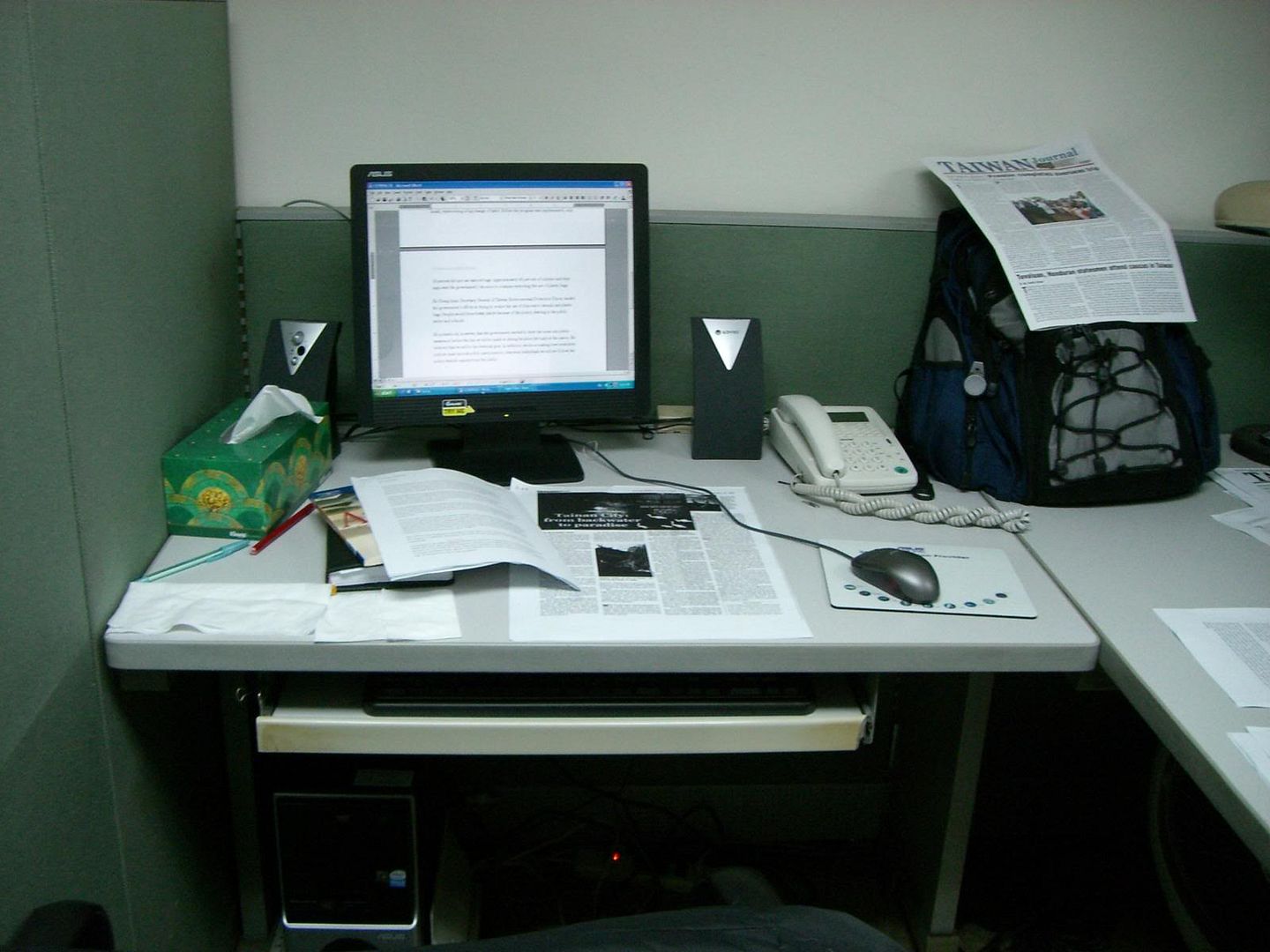
My cubicle at work.

Now that the crisis period has passed, and I can take some time to give you guys an update.

Luckily, everything worked out! I got the Taiwan visitor visa in Bangkok, and I got the newspaper editor job in Taipei.

This is the first 'normal' job I've ever had, so it was kind of strange. When I taught English in Shanghai, I worked from 1:30 p.m. to 9:30 p.m. Waking up at noon was routine. Now I had the same 9 a.m. to 5 p.m. schedule everyone else does. Instead of standing up and talking to students all day, I'm isolated in a cubicle with a computer. At an English school, there's a high turnover of students and teachers, so there's always new people to meet. Wow, I sound like I miss teaching English! Most English teachers would kill to get out of that racket and do something more professional.

With spoken English, you can mess around and there's a lot of room for error. As an editor, I deal with written English and when you make a mistake, everyone who reads the paper will see it. With teaching, you leave your work at school. With the newspaper, I'm constantly working overtime and sometimes on weekends to make the deadlines. Everyone reads over your work and comments on it before it gets printed. In a lot of ways, working at a newspaper is much more stressful than I imagined.

Then there's the actual editing itself. I have to revise and polish English-language articles written by Taiwanese reporters. I sometimes get handed articles that are abominations of English. Some of my friends think my job is just moving around commas and correcting spelling. It's a lot more complicated than that. I spend countless hours questioning writers and making sure my edited drafts match the stories they were trying to tell. There's a lot of communication needed, you can't just rearrange words on the computer and avoid talking to people. Cultural differences, historical background, and other factors make it more complicated than I realized when I first took the job.

One of my favorite things about working at a newspaper is that I get paid to learn about Taiwan. Now that I've been doing this job for almost a year, I feel like an expert on the place compared to fresh-off-the-plane English teachers. For example, an interesting fact about Taiwan's economy is that over 90% of the businesses here are small and medium-sized enterprises. So Taiwanese people will do almost anything that makes money. As a result, Taiwan excels at the most random industries, like bicycles, umbrellas, wedding planning and laptop computers.

Taiwanese are very outward-looking, so almost all my co-workers have worked or studied abroad. They're all fluent in English. Being around Asians all the time who speak English, I sometimes get lulled into thinking I'm back in Hawaii. I got a shock, however, the first time I attended a staff meeting. It was all conducted in Mandarin Chinese! I was completely lost and had no idea what anyone was saying. In Shanghai, my meetings were always with other English teachers, so English was spoken.

One thing I got confused by was how the boss called out to each writer by number; I understood enough Chinese to get that much. I asked a reporter why the boss did that. The others heard and burst out laughing. "The boss isn't calling us numbers, just the pages we write for!"

Managing these kinds of cross-cultural issues will be great material if I need to write an admission essay for grad school or talk about my experiences abroad in a job interview.

Now that I had a job, it was time to get an apartment. I'd lived at a hostel for five months, and I should have moved out a long time ago. I kept putting it off for various reasons: I'll wait until I get a job, I'll do it after my probation period at work ends, I'll save money for a deposit first. One of the big ones was having the opportunity to meet travelers from all over the world on a regular basis.

Eventually, it was the noise that drove me out. While I love World Scholar House, it's not really good for people who have to get up in the morning and need their sleep. Although I had my own room, I could still hear the noise from the common area. I have some great friends there, and I still go by to visit every week to round up people to go clubbing.

It's easier to get an apartment in China and Taiwan than Japan and South Korea. Landlords are more willing to rent to foreigners and they don't require ridiculously huge deposits. In Japan and Korea, your employer needs to be the guarantor and 6-month deposits are not unheard of.

I'd learned in Shanghai not to judge apartments by their buildings. The outside may look ripe for demolition, but often the apartments themselves are reasonably nice. That said, I saw a lot of hellholes during my apartment search. I had to watch my costs, too. Since Taipei is the capital of Taiwan, it's the most expensive city. At first, I wanted to get the lowest rent I could, in the NT$5,000 range (US$150) for shared housing. I quickly discarded that goal after I saw a few places. Since I was making a decent salary, I decided to go it alone without roommates and get my own studio.

This is a trivial point, but it was really important for me to find an apartment that had a dryer. In China, I'd gone for a year without a dryer. I was overjoyed when I first discovered that my hostel in Taipei had a dryer. If I moved out, I wasn't going to give up that luxury.

It took a lot of time before I found a nice studio in the middle of a university district. The rent is NT$12,000 (US$360). Besides deciding whether to have roommates, the other big decision is location. Get a smaller place in a central area or get a bigger place further away? When I was in college, an alumni told my class, "Live as close to work as you can. It's easier to work overtime when you have to and you get home that much sooner when you want to relax."

Commuting is the most stressful time of day for a lot of people, so I wanted to avoid that. My apartment is close to the MRT (Taipei's subway) and my office is only 3 stops away. I get to work in 15 minutes. My apartment is also convenient for getting to restaurants and nightclubs where young people hang out. I can't believe I was considering living further away to save a few bucks on rent. Cutting down my travel time is paying off in so many ways. When friends want to meet up, I can be there straight away.

When the landlord handed me the keys, I felt like I had finally become an adult. Now I had a real job and my own apartment at last.